
You might be in a season where your faith feels routine or maybe even a little distant.
You go to church on Sundays, or you’ve seen others do it all your life. This might make you wonder: Why Sunday? Why do Christians go on that particular day? Is it just tradition, or is there a deeper reason?
These are honest questions, and you’re not alone in asking them.
Let’s walk through this together and unpack the meaning, the history, and the heart behind why Christians worship on Sunday and why it still matters today.
Why Do Christians Worship on Sunday?
At first glance, Sunday might feel like just another day, convenient because it’s part of the weekend. But for Christians, Sunday carries deep spiritual meaning rooted in one life-changing event. Below are the reasons Christians worship on Sunday.
1. The Resurrection Changed Everything
The primary reason Christians worship on Sunday is simply that Jesus rose from the dead on a Sunday.
All four Gospels record that the resurrection happened on “the first day of the week,” which is Sunday. This moment didn’t just add to the Christian story; it defined it.
The resurrection represents victory over sin and death, proof of Jesus’ divine identity, and the foundation of Christian hope.
Without the resurrection, Christianity loses its core message. But because it happened, everything changed.
That’s why early believers began gathering on Sundays not out of obligation, but out of celebration. Sundays serve as a weekly reminder that hope is alive, grace is real, and your past doesn’t have the final say.
3. Sunday Became “The Lord’s Day.”
As the early church grew, Sunday took on a new name: “the Lord’s Day.”
In Revelation 1:10, the apostle John says he was “in the Spirit on the Lord’s Day.” This shows Sunday had already become a day for worship among believers.
This marked a shift from the traditional Jewish Sabbath (Saturday) to a new rhythm centered on Christ.
Sunday became a day to intentionally worship Jesus, reflect on His resurrection, gather with other believers, and focus on spiritual renewal.
It wasn’t about replacing the Sabbath with a rule; it was about embracing a new reality shaped by Jesus.
3. The Early Church Set the Pattern
If you look at the earliest Christians, you’ll notice that they consistently met on Sundays.
Acts 20:7 says: “On the first day of the week we came together to break bread.” This shows that Sunday gatherings were already a regular part of Christian life.
During these gatherings, believers would share communion, learn from Scripture, pray together, and encourage one another. This wasn’t a formal institution yet; it was a community built around shared faith and devotion.
So, Sunday worship isn’t a modern tradition. It goes back to the very beginning of Christianity.
Does the Bible Say to Worship on Sunday?
This is one of the most important questions, especially if you want your faith to be grounded in Scripture.
The Bible does not explicitly command Christians to worship on Sunday. You won’t find a verse that says, “You must go to church every Sunday.”
Instead, what you see is a pattern.
Here’s what the Bible shows:
- Jesus rose on Sunday.
- Jesus appeared to His disciples on Sunday.
- The early church gathered on Sunday.
- Sunday was called the Lord’s Day.
There’s no direct command. Sunday worship is based on meaning. This shows a shift from Old Testament Sabbath law to a New Testament focus on Christ’s resurrection.
In simple terms, the Sabbath was about rest, while Sunday is about resurrection and new life.
That’s why Christians don’t see Sunday as a legal requirement, but as a meaningful rhythm.
Why Do Christians Go to Church on Sundays?
Now that you understand why Sunday matters, let’s talk about why church matters.
You might be thinking: “Can’t I just worship God on my own?”
The honest answer is yes, you can. But that’s not the full picture.
1. Community and Connection
Faith was never meant to be lived alone.
When you go to church, you enter a community. Together, you worship as one body of faith. You receive encouragement and strength from each other.
Hebrews 10:25 encourages believers not to forsake the assembling of ourselves together. When you read the Acts of the Apostles and the epistles, you will see that the early Christians always gathered to worship.
Also, being around people who share your faith can strengthen you in ways you didn’t expect.
2. Spiritual Growth and Learning
Church isn’t just about attendance; it’s about growth. You grow by listening to teaching and preaching. You also grow through worship, prayer, and fellowship.
It helps you understand God more deeply. Your body needs food to stay healthy. Likewise, your spirit needs truth to stay grounded.
Sunday becomes a consistent opportunity to grow.
3. A Weekly Reset for Your Life
Life can feel overwhelming. Between responsibilities, stress, and distractions, it’s easy to lose focus on what truly matters.
Sunday offers a reset. It gives you space to pause and reflect on your life. You can refocus your priorities and reconnect with God. Instead of rushing through life, Sunday invites you to slow down and realign.
4. The Power of Worship Together
There’s something unique about worshipping with others.
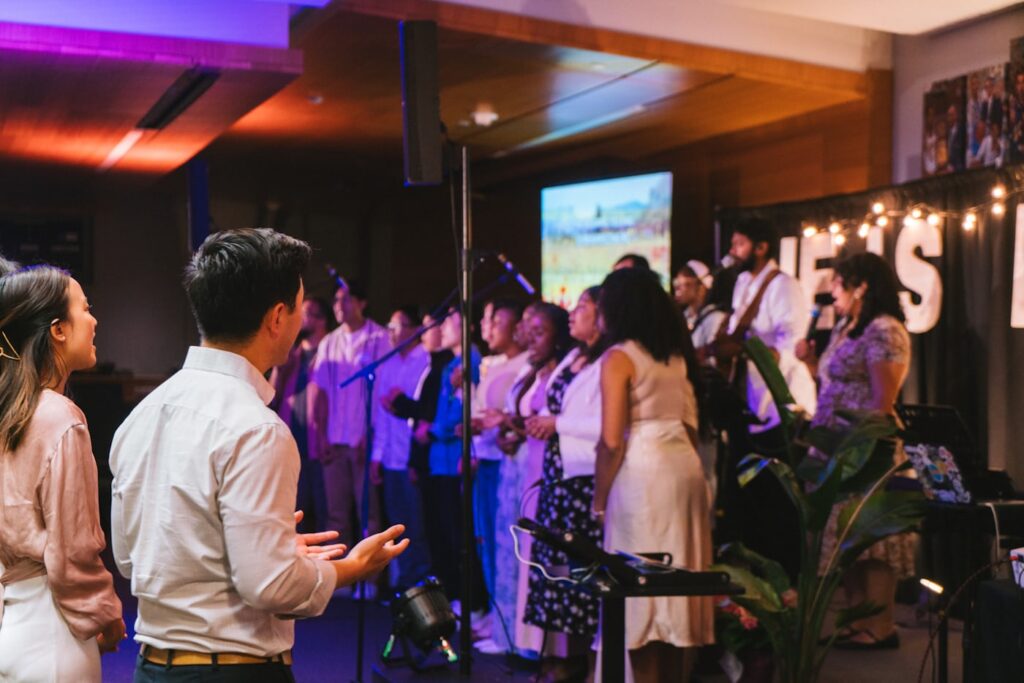
When people gather to sing, pray, and reflect, it creates a powerful unity. Faith grows stronger together.
It reminds you that you’re part of something greater than yourself. Worship becomes more than an individual act; it becomes a shared experience.
5. An Expression of Love and Devotion
For many Christians, going to church is an act of love toward God. It’s a way of saying: “God, You matter enough for me to give You my time.”
It’s not about checking a box; it’s about prioritizing a relationship. When you truly love someone, you prioritize them by creating time for them, and that’s what you do when you dedicate your Sundays to God by going to church.
Who Changed the Day of Worship from Saturday to Sunday?

This question often comes up, and it’s easy to assume there was a specific moment when everything changed.
But that’s not exactly what happened. No single person or authority officially switched the day of worship.
Instead, the change happened gradually:
- Jesus rose on Sunday.
- Early Christians began gathering on that day.
- The practice spread across Christian communities.
Over time, Sunday became widely recognized. By the second century, Sunday had already become the main day of worship.
Later developments formalized it, but the foundation was already there. The shift wasn’t forced; it was natural, rooted in the resurrection.
Why Is Sunday Sacred for Christians?
Sunday is considered sacred because it represents new life, victory, and hope.
It’s the day Jesus rose from the dead, the most important event in Christianity. Sunday stands for a fresh start, redemption and grace, God’s power over death, and the promise of eternal life.
- A fresh start
- Redemption and grace
- God’s power over death
- The promise of eternal life
Every Sunday becomes a small reminder of a bigger truth: No matter what happened yesterday, new life is possible.
Is Sunday the Only Day You Can Worship?
Not at all. You can worship God anytime and anywhere.
You can connect with God through prayer and worship anywhere, in your room, at work, or while walking, because God is omnipresent. He is everywhere at the same time.
Sunday isn’t about limiting worship; it’s about focusing it. It creates a rhythm in your week where you intentionally pause and reconnect.
Common Misunderstandings About Sunday Worship
It’s easy to misunderstand what Sunday worship is really about. Let’s clear a few things up.
- “It’s just a tradition.”
It’s much more than tradition. Sunday worship is rooted in the resurrection and in the early church’s practice.
- “You must go to church to be a Christian.”
Faith is personal, but community strengthens that faith.
- “Missing a Sunday means you’ve failed God.”
God is not counting your attendance. He cares about your heart.
Sunday is an invitation, not a rulebook.
What Sunday Worship Really Means for You
Fundamentally, Sunday is not about obligation; it’s about invitation.
It invites you to:
- Remember what Jesus has done.
- Reconnect with your faith.
- Realign your life with what truly matters.
It gives you time to step out of life’s noise and into something deeper.
It reminds you that your story isn’t over, your mistakes don’t define you, and your future still holds hope.
How to Make the Most of Sunday Worship
Understanding why Sunday matters is powerful. Experiencing it makes it meaningful. Don’t let Sunday become routine. Approach it with the intention to strengthen your faith.
Start by preparing your heart before Sunday arrives. This could be as simple as reflecting on your week, saying a short prayer, or setting an intention to be present. When you walk into a service with expectation rather than habit, your experience often becomes deeper and more personal.
During church, engage actively. Listen closely. Reflect on what resonates with you. Participate in worship genuinely. You don’t have to be perfect or have everything figured out. Just being open can make a difference.
After the service, take time to apply what you’ve learned. Ask yourself:
- What stood out to me today?
- Is there something I need to change or work on?
- How can I carry this into my week?
When Sunday stops feeling like a routine and becomes intentional, it no longer feels like an obligation. It becomes something you look forward to.
In a Nutshell
Christians worship on Sunday because it is the day Jesus rose from the dead, marking the foundation of their faith and the victory over sin and death. It is also the day the early church consistently gathered to break bread, pray, and grow together, establishing a pattern that continues to this day. Over time, Sunday became known as the Lord’s Day, a special time set aside to honor Christ and reflect on His resurrection.
Christians go to church on Sundays to grow spiritually, connect with others who share their faith, and worship together in a meaningful way. It also serves as a weekly opportunity to pause, reset, and refocus on what truly matters, helping believers realign their lives with God amidst the busyness of everyday life.