

Is Christmas pagan? No. Christmas is a Christian celebration of the birth of Jesus Christ, but some of its customs and its December date overlap with older winter festivals. The Bible neither commands nor forbids celebrating it, so each Christian is free to decide with a clear conscience (Romans 14:5-6).
If you have ever felt unsure when someone online said, “Christmas is just paganism with a bow on it,” you are not alone. This post gives you a simple, honest look at the history, the Bible, and how to decide for yourself.
Quick Answer: Is Christmas Pagan?
- Is Christmas itself pagan? No. It celebrates the birth of Jesus, which is a Christian event (Luke 2:11).
- Do some customs have pagan-era roots? Yes. Some traditions, like evergreens, feasting, and the December date, overlap with older winter celebrations.
- Does the Bible forbid Christmas? No. It also never commands it.
- Is it a sin to celebrate? Not by itself. Romans 14 says Christians may honor days differently, as long as they act in faith and do not judge each other.
What Does “Pagan” Mean?
Pagan describes religious practices that worship gods other than the God of the Bible. When people ask “Is Christmas pagan?”, they usually mean one of two things: Was Christmas copied from a pagan festival? And does that make it wrong for Christians today? Those are two different questions, and we will answer both.
Where Did December 25 Come From?
The Bible never gives the date of Jesus’ birth. The earliest record of Christians celebrating Christmas on December 25 comes from Rome in the fourth century, around AD 336. Historians offer two main explanations for the date.
1. The “borrowed date” theory. The Romans already held winter festivals. Saturnalia was celebrated in mid to late December, and Emperor Aurelian set a festival of the sun god (Sol Invictus) on December 25 in AD 274. Some historians believe the church chose this date to give people a Christian alternative.
2. The “calculation” theory. Some early Christian writers believed Jesus was conceived on March 25, the same date they connected with His death. Nine months later is December 25. Under this view, the date came from Christian reasoning, not from a pagan holiday.
Honest takeaway: historians still disagree, and no one can prove which theory is right. What we can say is that the date is a tradition, not a biblical command.
Are Christmas Trees, Santa, and Other Traditions Pagan?
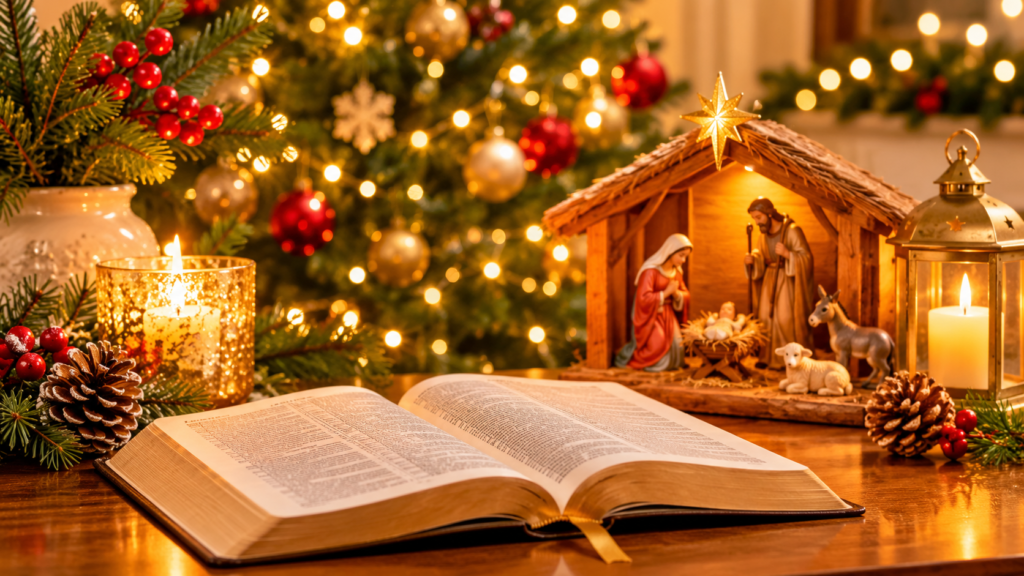
Most Christmas customs developed over centuries and mix Christian faith with local culture.
- Evergreen trees and wreaths: Evergreens were used in many winter traditions long before Christmas trees became popular in Germany in the 1500s.
- Santa Claus: He comes from Saint Nicholas, a Christian bishop in the fourth century known for helping the poor. The modern character grew from that story.
- Gift giving: Christians connect it to the gifts of the wise men (Matthew 2:11) and to God’s gift of His Son.
- Mistletoe and the Yule log: These do have older, non-Christian roots, and many Christians simply leave them out.
Some people quote Jeremiah 10:2-4 against Christmas trees. In context, that passage describes craftsmen making wooden idols and decorating them with silver and gold to worship them. Many Bible teachers say it is about idol making, not holiday decorating, though some Christians read it more cautiously. It is worth reading the whole chapter and deciding prayerfully.
What Does the Bible Say About Christmas?
The Bible does not mention Christmas as a holiday, but it has a lot to say about Jesus’ birth and about how Christians should treat disagreements like this one.
- The birth of Jesus is real and worth celebrating. The angel said, “Today in the town of David a Savior has been born to you” (Luke 2:11).
- No date is given. Luke 2:8 mentions shepherds in the fields, and some people use this to argue against a December birth, but the Bible does not settle the question.
- Christians have freedom on special days. Romans 14:5-6 says one person values one day over another, while another values every day alike, and each should be fully convinced in their own mind.
- We should not judge each other over it. Colossians 2:16-17 warns against letting others judge you over religious festivals.
- Where something comes from is not the only question. In 1 Corinthians 10:25-26, Paul tells believers they can eat food sold in the market without raising questions of conscience, because “the earth is the Lord’s.”
Why Some Christians Do Not Celebrate Christmas
Some believers skip Christmas out of conviction, and that deserves respect. Their reasons often include:
- The date and some customs have non-Christian roots.
- The Bible does not command the celebration.
- They feel Christmas has become too commercial.
This view has a long history. In the 1600s, English Puritans banned Christmas celebrations, and Massachusetts fined people for observing it from 1659 to 1681.
Why Many Christians Do Celebrate Christmas
Most Christians around the world celebrate it. Their reasons often include:
- The meaning of the day is the birth of Christ, not the old customs.
- A date’s history does not decide what a celebration means today. Many Christians believe that what matters is who we honor.
- Christmas is a natural time to share the gospel and gather with family and church.
3 Questions to Help You Decide
- Does this honor Jesus? Keep the focus on Christ, not just on gifts and decorations.
- Can I do this with a clear conscience? If something troubles your conscience, take it seriously (Romans 14:23).
- Am I loving the people around me? Do not look down on those who celebrate, or on those who do not.
How to Keep Christmas About Jesus
- Read Luke 2 together as a family on Christmas Eve or morning.
- Attend a Christmas service or serve in your church.
- Give to someone in need, as a way of reflecting God’s generosity.
- Set a spending limit so the season stays peaceful.
- Skip any custom that bothers your conscience, and explain your choice kindly.
Frequently Asked Questions
Is it a sin to celebrate Christmas? No. The Bible does not forbid celebrating Christ’s birth. Romans 14 teaches that Christians may differ on special days and should not judge each other.
Was Jesus born on December 25? We do not know. The Bible does not give the date. December 25 became the traditional date for celebrating His birth by the fourth century.
Is the Christmas tree pagan? The tree as we know it developed in Germany, and evergreens were used in older winter customs. Many Christians see the tree as simple decoration, while others avoid it. Both can be held with a clear conscience.
Is Santa Claus pagan? Santa comes from Saint Nicholas, a Christian bishop known for generosity. The modern version is a cultural character, and families decide how much place to give him.
Should Christians celebrate Christmas? That is a personal decision. Most Christians do, focusing on Jesus. Others do not, out of conviction. The Bible calls us to respect each other either way.
Is Christmas mentioned in the Bible? The holiday is not mentioned, but the birth of Jesus is described in Matthew 1-2 and Luke 1-2.
Final Thoughts
So, is Christmas pagan? Some customs have older roots, and the date’s origin is debated, but the heart of Christmas is Christian: God sent His Son. Whether you celebrate or skip the holiday, do it for the Lord, with a clear conscience and love for other believers.
A short prayer: Lord, thank You for sending Jesus. Give us wisdom to honor You in everything we do, and help us love those who see this differently. Amen.
What do you think? Do you celebrate Christmas, and how do you keep it centered on Jesus? Share in the comments.