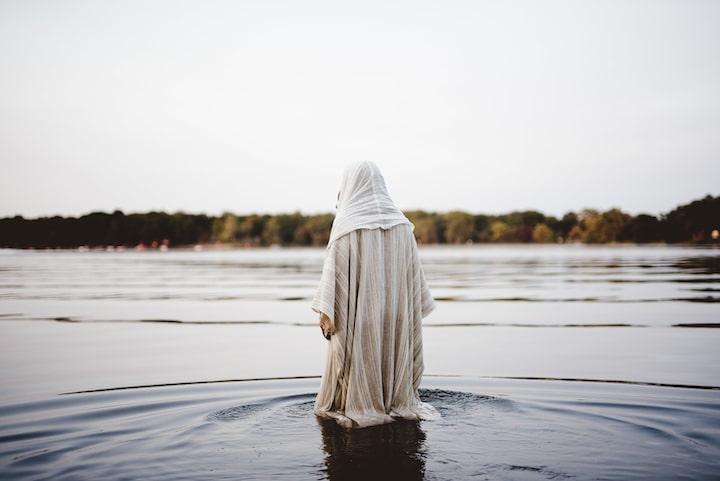
You may have watched a baptism and felt a mix of curiosity and wonder.
Perhaps you saw someone step into a pool of water in front of a church, listened as a pastor spoke a few solemn words, and then watched that person disappear beneath the surface only to rise again to applause and celebration.
In that quiet moment, you might have found yourself asking, “Why do Christians get baptized?”
Is it simply a church tradition passed down through generations? Is it required for salvation? Or is there something deeper and more meaningful behind it?
Whether you’re curious, considering baptism, or simply trying to understand Christian beliefs better, this article will guide you.
Let’s break it down together.
What Is Baptism in Christianity?
Baptism is one of the most important and meaningful practices in Christianity. Baptism is a sacred act where a person is immersed in water or has water poured or sprinkled on them as a sign of their faith in Jesus Christ.
The word “baptize” comes from a Greek word meaning “to immerse” or “to dip.” In the New Testament, baptism symbolized repentance, cleansing from sin, and the beginning of a new life. It was a visible way to show that something spiritual had already happened in a person’s heart.
Before Jesus began His public ministry, He was baptized by John the Baptist. This moment was powerful and significant.
The Bible describes the scene vividly in Matthew 3:16 (NIV): “As soon as Jesus was baptized, he went up out of the water. At that moment heaven was opened…”
Christians believe that Jesus was without sin, so He did not need to be baptized for repentance. Yet He chose to be baptized to fulfill righteousness and to set an example for others to follow.
His baptism showed humility, obedience, and identification with humanity. From that point forward, baptism became a central practice for His followers.
Why Do Christians Get Baptized?
1. Jesus Commanded Baptism
One of the clearest reasons Christians get baptized is because Jesus directly commanded it. Before ascending to heaven, Jesus gave what is known as the Great Commission. As recorded in Matthew 28:19–20 (NIV), “Therefore go and make disciples of all nations, baptizing them in the name of the Father and of the Son and of the Holy Spirit…”
This instruction was not presented as optional. It was a direct command to His disciples. Baptism became part of the process of making disciples by teaching people about Christ and welcoming them into the faith. So when Christians choose to be baptized, they are responding in obedience. It is their way of saying, “I want to follow what Jesus instructed.”
The early church practiced this immediately. When people believed the message of the gospel, they were baptized as a public step of commitment. The early church leader Paul the Apostle later explained that obedience flows naturally from genuine faith.
Baptism became one of the first outward expressions of that faith. Obedience in Christianity is not about fear. It is about love and trust. Baptism, therefore, becomes a joyful act of obedience rather than a forced ritual.
2. Baptism Is a Public Declaration of Faith
Faith is deeply personal, but it is not meant to stay hidden. Christianity teaches that believing in Jesus is something to be shared, witnessed, and lived openly. Baptism is the moment when that inner faith becomes visible to others.
When a Christian is baptized, they are publicly declaring, “I believe in Jesus, and I have chosen to follow Him.” It’s a bold and joyful way of showing the world where their allegiance lies. This act of openness strengthens the believer’s commitment and encourages others in the faith community.
As Romans 10:9 (NIV) reminds us: “If you declare with your mouth, ‘Jesus is Lord,’ and believe in your heart that God raised him from the dead, you will be saved.”
This public aspect is important. It strengthens the believer’s commitment and encourages the faith community. It also marks a clear moment in a person’s spiritual journey.
A well-known Christian quote explains it: “Baptism is an outward expression of an inward decision.” In other words, the water itself does not create faith. It reveals faith. It shows what has already taken place in the heart.
3. Baptism Symbolizes Death and New Life
One of the most powerful meanings behind baptism is transformation. When someone is lowered into the water, it represents dying to their old, sinful life.
When they are raised out of the water, it represents being raised to new life in Christ. This imagery comes directly from Scripture.
Romans 6:4 (NIV) says it perfectly, “We were therefore buried with him through baptism into death in order that, just as Christ was raised from the dead… we too may live a new life.”
The physical movement mirrors a spiritual reality. Just as Christ died and rose again, believers symbolically participate in that story through baptism.
This is why many churches practice full immersion. The action beautifully illustrates death to sin, burial of the old self, and resurrection into new life. It is a picture of spiritual rebirth and renewal.
Baptism does not mean a person becomes perfect overnight. Christians still grow, struggle, and learn. But it marks the beginning of a new direction, a life centered on Christ rather than self.
Does Baptism Save a Person?
This question has been discussed among Christians for centuries. Some Christian traditions teach that baptism is closely connected to salvation.
Others believe salvation comes through faith alone, and baptism follows as an act of obedience. One verse often referenced is Mark 16:16 (NIV): “Whoever believes and is baptized will be saved…”
At the same time, the Bible clearly emphasizes that salvation is a gift of grace, not something earned through actions.
Ephesians 2:8–9 (NIV) says, “For it is by grace you have been saved, through faith… not by works, so that no one can boast.” Because of this, many Christians understand baptism not as something that earns salvation, but as something that confirms and expresses it.
A simple way to understand this is through the analogy of a wedding ring. The ring does not make someone married; it symbolizes the commitment already made.
In the same way, baptism symbolizes belonging to Christ. It is not the water that saves. It is faith in Jesus. Baptism is the visible sign of that faith.
What Are the Five Important Aspects of Baptism to Christians?
Now let’s clearly answer this important question.
1. Baptism Is an Act of Obedience
Jesus commanded His followers to be baptized. Obeying Him demonstrates love and commitment. John 14:15 (NIV) says, “If you love me, keep my commands.” For Christians, baptism is one of those commands.
2. Baptism Publicly Identifies You With Christ
Baptism is a powerful way to show that you identify with Jesus ‘ death, burial, and resurrection. It’s more than just an outward ceremony; it is a visible declaration of your faith and commitment. When someone is baptized, they are saying, “I belong to Him,” to both God and the community of believers.
3. Baptism Symbolizes Spiritual Cleansing
Water is a symbol of cleansing and renewal throughout Scripture, and baptism carries this same spiritual meaning. Through baptism, a believer identifies with the forgiveness and renewal offered by Jesus. It is a symbolic act that marks the washing away of the old life and the beginning of a spiritually refreshed journey.
4. Baptism Marks the Beginning of a New Life
Baptism is also a sign of a fresh start. It represents leaving behind the old life and stepping into a new life in Christ. For many believers, it becomes a milestone, a clear turning point in their spiritual journey.
5. Baptism Connects You to the Christian Community
Baptism is not just a personal act; it also connects believers to the larger body of Chris, the Church. Christianity is a faith meant to be lived in community, and baptism welcomes a person into that fellowship. 1 Corinthians 12:13 (NIV) captures it as it states that “For we were all baptized by one Spirit so as to form one body…”
Different Types of Baptism in Christianity
Christian denominations practice baptism differently:
- Some baptize by full immersion.
- Others sprinkle or pour water.
- Some baptize infants.
- Others baptize only those old enough to profess faith personally.
Despite these differences, the core meaning remains consistent: baptism represents a commitment to Christ and entry into the Christian faith.
What Happens During a Baptism Ceremony?
While practices vary, most ceremonies include a brief teaching on baptism, a testimony from the person being baptized, a prayer, the baptism itself, and celebration by the congregation.
Often, the pastor says: “I baptize you in the name of the Father, the Son, and the Holy Spirit.” It is usually a joyful and emotional moment, not because of the water, but because of what it represents.
Why Baptism Still Matters Today
In a world where faith is often kept private, baptism remains bold and meaningful. It says, “I have chosen to follow Christ, I am not ashamed of my faith and I belong to a new life.”
Matthew 10:32 (NIV) states, “Whoever acknowledges me before others, I will also acknowledge before my Father in heaven.” For Christians, baptism is not an outdated ritual. It is a living testimony.
In a Nutshell
In a nutshell, Christians get baptized for several meaningful reasons. Jesus commanded it, and He modeled it through His own baptism.
It publicly declares a believer’s faith, symbolizes death to sin and the beginning of a new life, marks a serious spiritual commitment, and connects the individual to the Church, the body of Christ.
Fundamentally, baptism is about identity, stepping into the water and saying, “My old life is behind me. I belong to Christ now.”
It is far more than just a ceremony or a tradition; it is a powerful declaration of faith, obedience, and transformation. This is why baptism continues to hold deep significance for Christians all around the world.